How Long Different Roofing Materials Last in Wellington
One of the most common questions Wellington homeowners ask when planning a roof replacement is how long the new roof will last. The answer depends almost entirely on which material is installed, because South Florida’s climate affects roofing materials so differently from most of the country that national lifespan figures are largely irrelevant. A shingle that performs reliably for 30 years in Michigan may reach the end of its effective service life in Wellington in 15 years. Understanding the realistic lifespans of each roofing material in Wellington’s specific environment gives homeowners a rational basis for comparing costs, planning maintenance schedules, and making material decisions that align with how long they intend to hold the property.
Asphalt Shingles: 15 to 18 Years
Architectural shingles are the most widely installed roofing product in the United States and are commonly used in Wellington communities where HOA requirements permit them. In South Florida, their practical service life is 15 to 18 years, compared to the 25 to 30 years that manufacturers often reference in their warranty marketing. The difference is driven primarily by UV intensity and thermal cycling. Wellington’s year-round sun exposure degrades the asphalt mat and granule adhesion at a rate that temperate climates do not produce.
At 13 to 15 years, a shingle roof in Wellington should be professionally evaluated regardless of whether leaks have appeared. Signs of approaching end of life include significant granule accumulation in gutters, visible granule loss creating color inconsistency across the field, and early edge cracking or slight curling on south and west-facing planes. Insurance carriers in Palm Beach County often begin scrutinizing shingle roofs at 15 years, so proactive planning before this threshold avoids coverage complications.
Concrete Tile: 25 to 35 Years Surface Life, 20 to 25 Years Underlayment
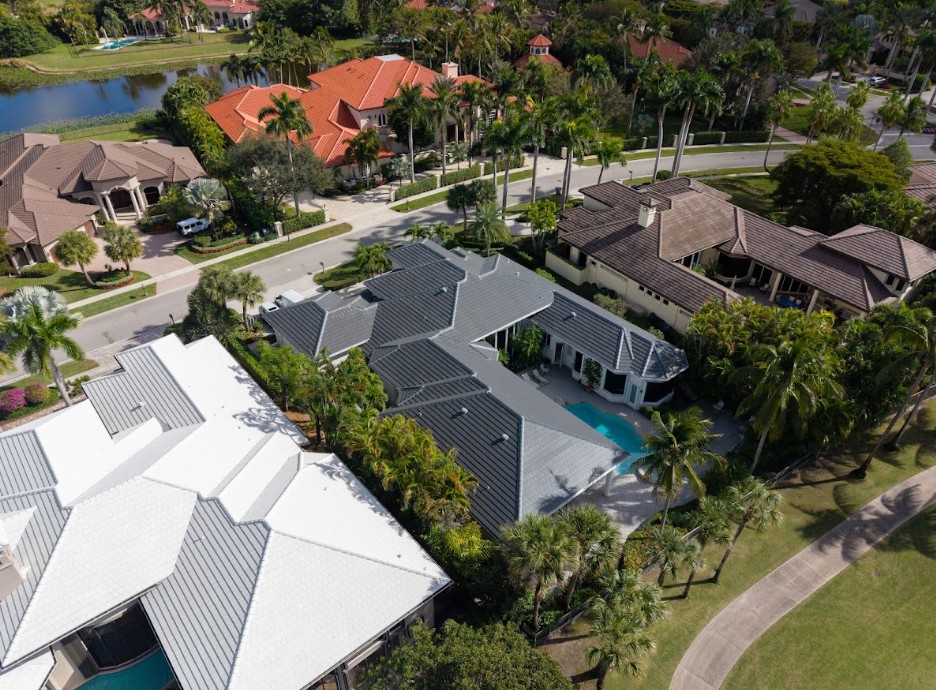
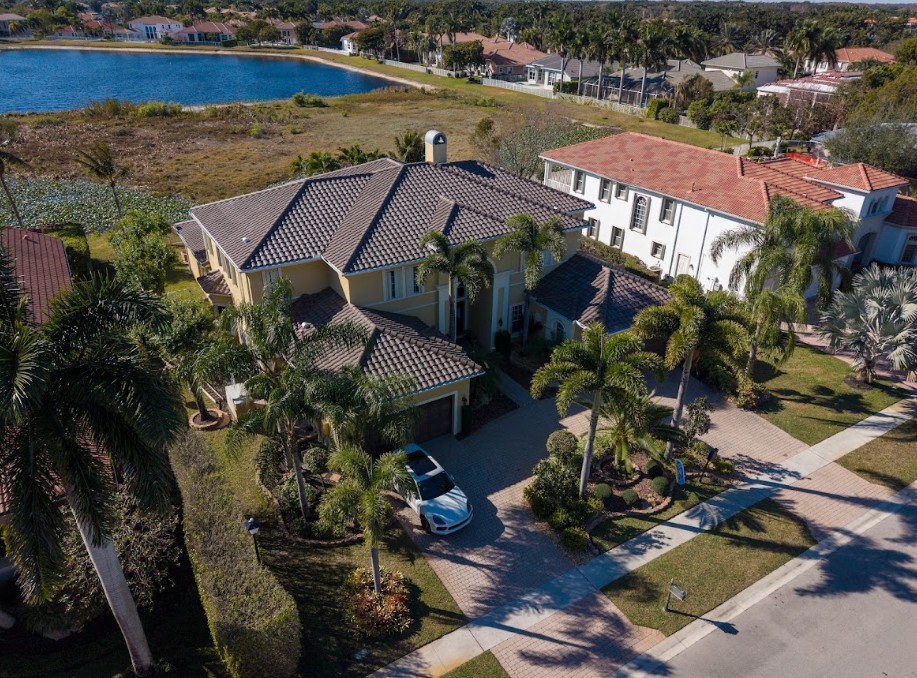
Concrete tile is the most common roofing material in Wellington’s established residential communities. The tile surface itself, when properly maintained, can perform adequately for 25 to 35 years in South Florida’s environment. However, the underlayment system beneath the tile typically reaches the end of its effective service life at 20 to 25 years, creating a situation where the tile surface appears intact but the waterproofing layer beneath it has failed.
This means the practical replacement trigger for a concrete tile roof in Wellington is often underlayment condition rather than tile condition. A professional assessment at 18 to 20 years that evaluates underlayment condition through attic inspection and the roof’s leak history is the appropriate planning trigger. In some cases, the underlayment can be replaced while retaining the tile if the tile is in sound condition. In others, full replacement of both systems is the more cost-effective path.
Clay Tile: 40 to 50 Years Surface Life, 20 to 25 Years Underlayment
Clay tile’s fired-through density and inherent color stability give it significantly better longevity than concrete tile in South Florida’s climate. The tile surface on a clay tile roof can maintain its structural integrity and appearance for 40 to 50 years or more in Wellington’s environment. As with concrete tile, the limiting factor is the underlayment, which operates on the same timeline regardless of whether the tile above it is concrete or clay.
The higher initial cost of clay tile is partially justified by its surface longevity advantage over concrete. For Wellington homeowners with long-term planning horizons, clay tile’s 40 to 50 year surface life means that a single tile investment, with one underlayment replacement at approximately the 20-year mark, can serve the home for decades without full material replacement. This is a different cost calculation than the one that applies to shingle or concrete tile systems.
Modified Bitumen and TPO Flat Membrane: 15 to 20 Years
Most Wellington homes have at least some flat or low-slope roofing sections, typically over garages, additions, and covered entries. Modified bitumen, the most commonly installed flat membrane system in South Florida, has an effective service life of 15 to 20 years in Wellington’s climate. The sustained UV and heat exposure, combined with the thermal cycling of flat sections that lack the ventilation available under sloped roofing assemblies, places these membranes under continuous stress that limits their service life.
TPO single-ply membranes, which are increasingly used in residential applications due to their white reflective surface and heat-welded seams, may offer somewhat longer service life in South Florida conditions due to their UV resistance and the mechanical integrity of heat-welded seam connections. Professional evaluation of flat sections at 12 to 15 years is appropriate regardless of membrane type.
Metal Roofing: 30 to 40 Years in South Florida Conditions
Standing seam metal roofing is less common in Wellington’s residential market but is used on some homes, particularly on steep commercial-residential properties and custom homes. In South Florida’s environment, properly installed and maintained metal roofing with a quality Kynar or similar fluoropolymer finish can deliver 30 to 40 years of service life. Metal roofing is highly wind-resistant when properly installed to HVHZ standards and generates strong wind mitigation profiles. The higher initial cost reflects this longevity advantage.
| Material | Typical lifespan in Wellington | What drives the lifespan | When to schedule a professional evaluation |
| Asphalt shingles | 15 to 18 years, compared to the 25 to 30 years often cited in warranty marketing | UV intensity and thermal cycling degrade the asphalt mat and granule adhesion | 13 to 15 years |
| Concrete tile | 25 to 35 years for the tile surface; 20 to 25 years for the underlayment | Underlayment condition, which often fails while the tile still looks intact | 18 to 20 years |
| Clay tile | 40 to 50 years or more for the tile surface; 20 to 25 years for the underlayment | Underlayment condition, on the same timeline as concrete tile | Around the 20-year mark for underlayment replacement |
| Modified bitumen flat membrane | 15 to 20 years | Sustained UV, heat and thermal cycling on unventilated flat sections | 12 to 15 years |
| TPO flat membrane | May last somewhat longer than modified bitumen | UV resistance and heat-welded seams help extend service life | 12 to 15 years |
| Standing seam metal | 30 to 40 years | Proper installation and maintenance with a quality Kynar or similar fluoropolymer finish | — |
Frequently Asked Questions
Does the direction my roof faces affect how long the material lasts in Wellington?
Yes. South and west-facing roof planes receive the most direct afternoon sun exposure and typically show deterioration earlier than north-facing planes on the same roof. A professional inspection should evaluate each plane independently. The overall replacement decision is informed by the condition of the most-deteriorated planes, since those are where failures will occur first.
How does the 15-year insurance threshold for shingles affect my planning in Wellington?
Palm Beach County’s insurance market increasingly scrutinizes shingle roofs at or approaching 15 years of age. Beginning the replacement planning process at 13 to 14 years gives time for HOA approval, permitting, and material lead times without urgency, and positions the replacement to occur before carrier action rather than in response to it.
Can the underlayment on a tile roof in Wellington be replaced without replacing the tile?
Yes. When the tile is in good condition but the underlayment has reached the end of its service life, the tile can be carefully removed, stored, and reinstalled after new HVHZ-compliant underlayment is installed on the deck. This is appropriate when the tile surface is sound. The labor cost of careful tile removal and reinstallation is significant, so the cost-effectiveness of this approach compared to full replacement depends on the tile’s condition and the replacement tile’s cost.
Does homeowner’s insurance cover material replacement when a roof reaches the end of its service life in Wellington?
Insurance covers sudden, storm-related damage, not age-related deterioration. A roof that reaches the end of its service life and is replaced is a maintenance cost, not an insurance claim. The insurance relevance of the new roof comes after installation, when a wind mitigation inspection documents the new system’s features and supports premium credits on the policy going forward.
Which roofing material is the best investment for a Wellington home I plan to sell in five to ten years?
For a shorter holding period, the key consideration is ensuring the replacement roof eliminates insurance complications, supports a strong wind mitigation report, and satisfies HOA requirements without the premium cost of clay tile’s additional longevity. A properly installed HVHZ-compliant concrete tile or high-grade shingle system achieves these goals while preserving more capital than clay tile for a five to ten-year horizon.
Plan Your Replacement With the Right Material
In Wellington, how long a roof lasts depends far more on the material than on national lifespan figures. Asphalt shingles typically give 15 to 18 years, modified bitumen flat sections 15 to 20, and standing seam metal 30 to 40. Concrete and clay tile can last 25 to 50 years or more on the surface, but the underlayment beneath them usually reaches the end of its service life at 20 to 25 years, so for tile roofs the real replacement trigger is often the waterproofing layer you cannot see.
The most useful step is to plan around those timelines rather than wait for a leak. Schedule a professional evaluation at 13 to 15 years for shingles, 12 to 15 years for flat sections and 18 to 20 years for tile, and pay close attention to the south and west-facing planes that wear out first. For shingle roofs, starting the replacement process at 13 to 14 years leaves time for HOA approval, permitting and material lead times before insurance scrutiny begins at 15 years. When it is time to choose a new material, weigh its realistic Wellington lifespan against how long you plan to keep the home, since a five to ten year horizon and a multi-decade one call for very different investments.

Written by
Dante Weston
Owner at SK Quality Roofing, Dante Weston brings extensive experience in residential and commercial roofing. He is passionate about helping homeowners and businesses protect their properties with quality roofing solutions and practical maintenance advice. Dante provides useful tips, guidance, and insights to help readers make informed decisions about roofing projects and upkeep.

Recent Posts