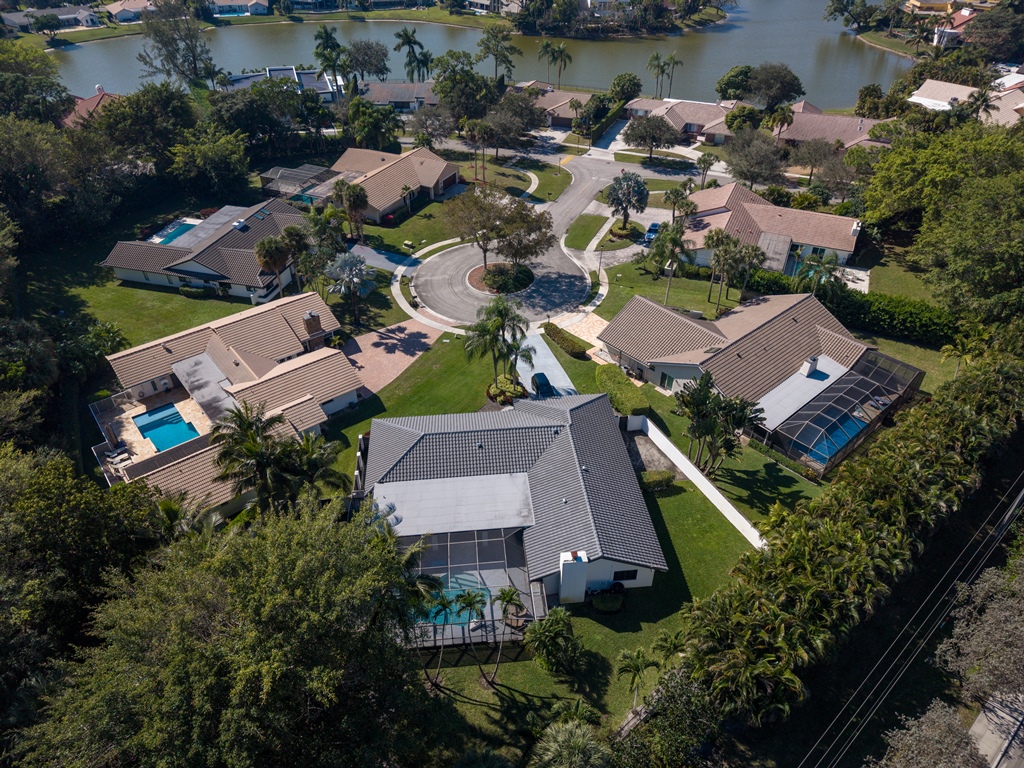
Why Flat Roofs Fail in South Florida and How to Prevent It in Boynton Beach
Flat and low-slope roofing sections are common on Boynton Beach homes. Garages, rear additions, covered entries, and second-story overhangs frequently carry flat or low-slope systems that are fundamentally different in design and vulnerability from the sloped tile or shingle systems on the main roof. These sections fail in predictable ways in South Florida’s climate, and understanding those failure patterns is the most effective starting point for preventing them.
How Flat Roofs Work and Why They Require Drainage Above All Else
A sloped roof sheds water by directing it down and off the roof surface. A flat roof has no meaningful slope for water to follow, so it depends entirely on a drainage system, typically interior drains, scuppers, or a combination of both, to remove water before it can accumulate and work through the membrane. When that drainage system functions as designed, a flat roof can perform reliably for many years. When it does not, water accumulation becomes the primary driver of every failure mode that follows.
In Boynton Beach, where afternoon thunderstorms during summer can produce several inches of rain in a short period, drainage capacity is not a theoretical concern. A flat section drain clogged with debris from palm fronds, dust, or organic buildup can allow standing water to develop within minutes during a heavy storm. Standing water on a flat roof membrane creates hydrostatic pressure that exploits every seam, penetration, and weak point in the system.
Blistering and Membrane Failure
Blistering is one of the most visible signs of flat roof deterioration in South Florida. Blisters form when trapped moisture or air beneath the membrane expands under the heat of South Florida’s sun and creates raised bubbles on the surface. Each blister represents a point of delamination where the membrane is separating from the substrate beneath it. When a blister is walked on, exposed to heavy rain impact, or subjected to wind uplift, it can rupture and create a direct water entry point.
South Florida’s UV intensity also causes the surface membrane to oxidize and become brittle over time. On modified bitumen systems, which are common on Boynton Beach residential flat sections, the granulated cap sheet that protects the membrane from UV degradation gradually loses its effectiveness. On TPO and similar single-ply systems, prolonged UV exposure affects the seam integrity and surface flexibility. Both types of deterioration are accelerated by the heat and UV levels in this region compared to cooler markets.
Seam Failures and Penetration Leaks
Flat roof membranes are not installed as single seamless sheets. They are installed in overlapping sections with seams that are heat-welded, adhered, or sealed. Those seams are the most vulnerable points in the system because they are the locations where thermal expansion and contraction stress concentrates over time. In Boynton Beach’s climate, where flat sections experience significant temperature swings between nighttime and afternoon highs, seam fatigue is a consistent long-term failure driver.
Penetrations through the flat section, including pipe boots, HVAC curbs, and drain assemblies, represent additional vulnerability points where the membrane must be sealed around a protrusion. Sealants at these locations degrade under UV exposure and require periodic inspection and maintenance to remain watertight. A penetration seal that has failed may not produce an interior leak immediately if water is still being directed to the drain, but it becomes a leak source the moment water accumulates near it.
Poor Original Installation
Not all flat roof failures in Boynton Beach are the result of age and climate. Some represent problems that were present from the day of installation. Inadequate slope to the drain is a frequent issue on flat sections installed over additions and garages, where the framing design did not provide sufficient pitch to move water toward the drain efficiently. Improper seam overlap, insufficient adhesive application, and failure to properly flash penetrations are installation defects that may take a few seasons to produce visible symptoms but are present from the start.
This is one reason why the permit and inspection process for flat roof installations matters. The in-progress inspection that occurs before the membrane surface is complete gives an inspector the opportunity to evaluate the installation quality at the stage when corrections are still straightforward. Work performed without permits does not go through this checkpoint.
Prevention: Maintenance as the Primary Strategy
The most effective strategy for preventing flat roof failure on Boynton Beach homes is regular maintenance with specific attention to drainage. Drains should be cleared of debris at least twice a year, ideally before and after hurricane season. The membrane surface should be inspected for blistering, cracking, and seam separation annually, and any identified issues should be addressed promptly before they develop into water intrusion events. Penetration seals should be examined and touched up as part of the same inspection.
When a flat section approaches 15 to 20 years of service, a professional assessment of the membrane condition, the drain system, and the substrate beneath the membrane is worthwhile regardless of whether leaks have appeared. At this age in South Florida’s climate, the system may be approaching the end of its reliable service life even if it has not yet produced a visible symptom.
Frequently Asked Questions
How long does a flat roof last in South Florida?
Modified bitumen flat roofs in South Florida typically last 15 to 20 years with proper maintenance. TPO and similar single-ply systems can last 15 to 25 years depending on the product and installation quality. South Florida’s UV intensity and storm exposure generally place these systems at the shorter end of their rated service life ranges compared to cooler climates.
Can a flat roof be repaired, or does it always need full replacement?
Flat roofs with isolated damage, a small number of blisters, a single seam separation, or a failed penetration seal are generally strong repair candidates. Flat roofs with widespread membrane deterioration, extensive blistering across large areas, or substrate damage from long-term moisture intrusion are typically more cost-effective to replace than to continue repairing. A professional assessment will identify which situation applies.
What is the best flat roof system for Boynton Beach homes?
Both modified bitumen and TPO systems perform well in South Florida when properly installed with Florida Product Approved materials and to HVHZ standards. The best choice depends on the specific application, the substrate, and the drainage configuration. Your roofing contractor can recommend the appropriate system based on the conditions of the specific section being addressed.
Why does my flat roof only leak during certain storms?
Flat roof leaks that appear only during specific storm conditions often indicate a penetration seal failure or seam separation that only allows water entry when water accumulates to a certain depth or when wind drives rain at a specific angle. The failure point may not be producing a leak under normal rain conditions but activates when drainage is overwhelmed or when wind creates pressure at the vulnerable point.
Does homeowner’s insurance cover flat roof repairs in Florida?
Insurance policies in Florida cover sudden, storm-related damage to flat roofs, including wind damage, impact from debris, and storm-caused membrane failures. Damage resulting from age, poor maintenance, or deferred repairs is generally not covered. Keeping maintenance records and addressing identified issues promptly creates a documented history that supports insurance claims when storm damage does occur.
SK Quality Roofing has been serving South Florida homeowners since 1982, with more than 14,000 residential projects completed across Broward and Palm Beach County. For flat roof repair and maintenance in Boynton Beach, contact SK Quality Roofing at 954-754-5849 or visit https://www.skqualityroofing.com/contact-us/.

Written by
Dante Weston
Owner at SK Quality Roofing, Dante Weston brings experience and expertise in residential and commercial roofing. He is passionate about helping homeowners and businesses protect their properties with quality roofing solutions and practical maintenance advice. Dante provides useful tips, guidance, and insights to help readers make informed decisions about roofing projects and upkeep.

Recent Posts

Shingle Roofing in Older Neighborhoods: What Homeowners Face in Greenacres
September 16, 2026
